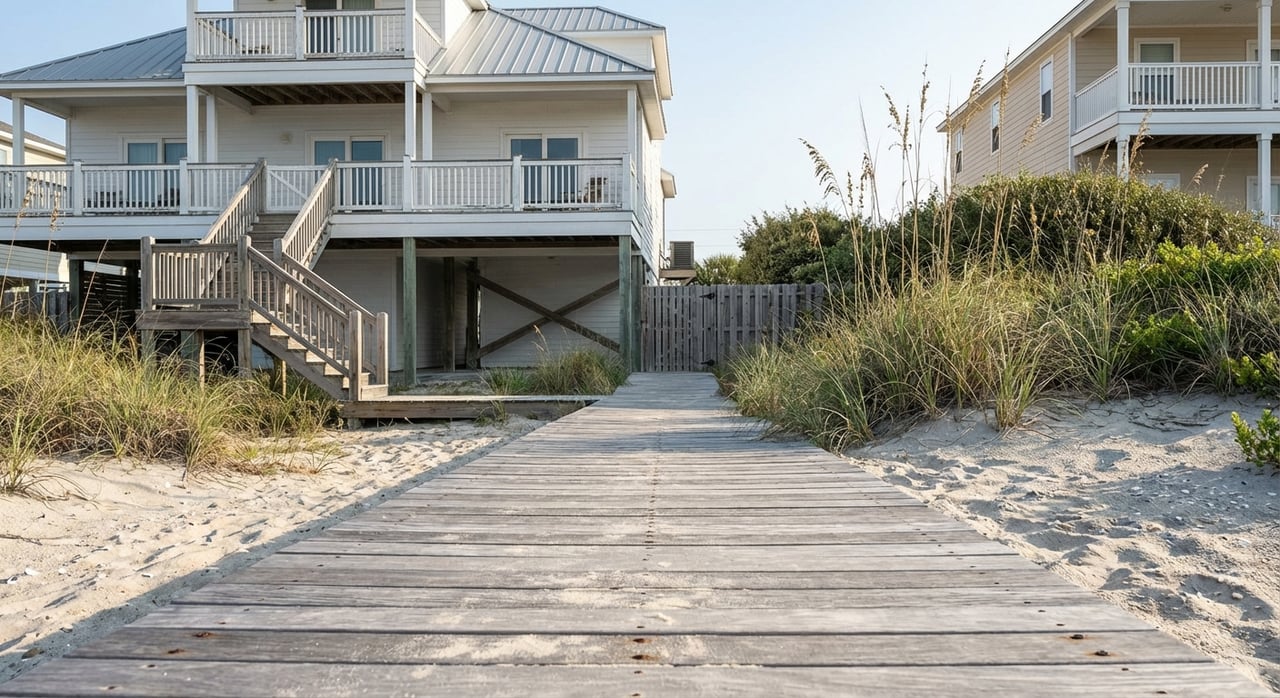
Torn between a front‑row ocean view and the value you get one lot back? You are not alone. In North Topsail Beach, both oceanfront and second‑row homes offer a great coastal lifestyle, but they feel different, cost different, and carry different levels of risk. In this guide, you will learn how those tradeoffs play out in daily life, insurance and financing, rental income, and long‑run ownership costs so you can choose with confidence. Let’s dive in.
Quick comparison
Oceanfront
- Lifestyle: Direct beach access, sweeping views, sunrise decks, and the most sought‑after experience.
- Risk: Highest exposure to storm surge and erosion, with more frequent maintenance needs.
- Insurance and financing: Often higher and more complex, especially where CBRA applies.
- Rental income: Typically the highest peak ADRs and booking demand in summer.
- Long‑run costs: Expect above‑average upkeep for exterior systems and beach access structures.
Second row
- Lifestyle: Quieter feel with less foot traffic, many homes still get views from upper floors.
- Risk: Lower exposure to direct wave action and overwash than oceanfront.
- Insurance and financing: Often easier and less expensive than oceanfront, parcel by parcel.
- Rental income: Solid occupancy at slightly lower ADRs, with appealing net yields after costs.
- Long‑run costs: Fewer big‑ticket exterior repairs tied to direct wave impact.
Daily life on each block
Views and privacy
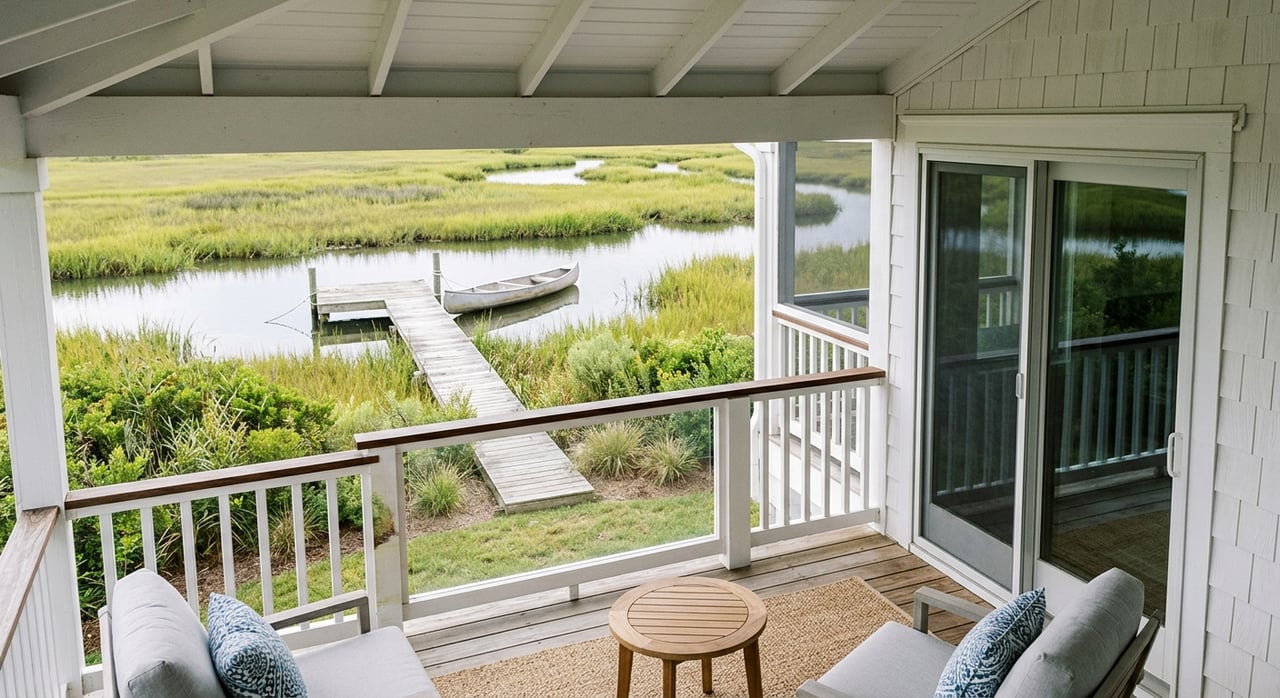
If you want the sound of surf and an easy stroll to the water, oceanfront delivers that in full. Decks and living spaces often face the sea, and that view is a top driver of purchase premiums and rental rates. Many second‑row homes still capture ocean views from upper levels, but the feel is more private with less beach traffic out front. In rental season, top oceanfront listings can command higher average daily rates than off‑beach peers, which is consistent with market snapshots such as the Airbtics report for North Topsail Beach.
Beach access, dunes, and projects
Oceanfront owners often have stairs over the dune or use nearby public beach accesses. Second‑row owners typically walk to a designated access point. North Topsail Beach invests in shoreline work and paid‑parking programs that influence day‑to‑day convenience for owners and guests. During nourishment windows, you may see equipment or temporary access changes. The town recently completed a nourishment phase that widened certain sections, as noted in this project update.
Erosion and storm reality
North Topsail Beach is a barrier island community. That means exposure to hurricanes and nor’easters, shifting dunes, and variable beach width by season and reach. Oceanfront parcels feel the most change over time, and that often shows up in public shoreline work and private maintenance needs. Second‑row homes reduce direct wave exposure, which many buyers value for long‑term ownership.
Flood zones, CBRA, and your loan
Flood zones and elevation
Every parcel is unique. Some properties sit in coastal high‑hazard zones that require elevation on pilings and stricter construction standards. Others fall in lower wave‑action zones, which can change insurance costs and building rules. Local code in North Topsail Beach aligns with NFIP requirements and adds details like freeboard and documentation for elevation certificates that you will want to confirm during due diligence.
CBRA in North Topsail Beach
Parts of North Topsail Beach are within the Coastal Barrier Resources System. That status can limit access to certain forms of federal financial assistance and may restrict the availability of NFIP flood insurance for structures built after the designation or substantially improved. It also affects eligibility for some federal beach‑project dollars. The town’s overview explains local impacts in more detail on its CBRA information page. If you are evaluating a property, verify CBRA status early and confirm how your lender treats it.
Insurance and upkeep costs
Home and wind coverage
Insurance costs across coastal North Carolina have been rising. State regulators recently announced a settlement that increases base homeowners rates in many coastal territories through 2025 and 2026. Before you write an offer, get quotes and model several years of potential changes. See the North Carolina Department of Insurance update for context.
Flood insurance realities
If a property is eligible for NFIP, premiums are tied to the structure’s elevation, flood zone, and mitigation features. Homes in coastal high‑hazard zones generally see higher flood premiums. In CBRA areas, NFIP may not be available for certain post‑designation structures, which can push you to private flood markets at full‑risk rates. That can change your cash flow and loan options, so get written quotes and lender feedback early.
Maintenance on the coast
Salt, sun, wind, and humidity accelerate wear on exterior finishes, fasteners, decks, railings, and HVAC systems. Oceanfront homes take the brunt of that exposure, including potential repairs to stairs and dune walkovers after major storms. Second‑row homes typically see less direct impact, which can reduce big exterior expenses over the long run. For best practices on coastal durability, review FEMA’s coastal construction guidance, including maintenance themes highlighted in the FEMA Building Science resources.
Rental potential and taxes
Oceanfront homes often deliver the highest peak ADRs and strong summer demand, though their higher insurance and maintenance can narrow net income. Second‑row properties can post competitive occupancy and appealing net yields because recurring costs are often lower. For a snapshot of local STR performance, the Airbtics market overview cites average daily rates in the low to mid $300s with seasonal swings that favor summer weeks.
If you plan to rent, confirm your tax and compliance steps with the town. North Topsail Beach imposes a 3 percent municipal accommodation tax that supports shoreline work, which is added to state and county taxes. See the town’s guidance for operators on the Realtors and Landlords page.
Shoreline projects and timing
North Topsail Beach runs ongoing nourishment and dune restoration in phases. These projects widen the beach in the near term and support dune health, but timing varies by reach and funding. In some parts of town, CBRA limits federal participation in shoreline work, which can influence schedules and funding sources. Expect occasional equipment on the beach during active phases and check project timelines when you plan a closing or a busy rental season. A recent nourishment project completion update is a good example of how these efforts roll out.
Buyer checklist for smart due diligence
Use this quick process to reduce surprises and compare oceanfront to second row on a specific address.
Pull the official flood map. Download the FIRM for the address using FEMA’s Map Service Center. Ask the seller for any existing Elevation Certificate.
Confirm CBRA status. Check the parcel against U.S. Fish and Wildlife Service guidance in the CBRA FAQs and ask your lender how it affects loan programs and flood insurance.
Get insurance quotes early. Price both homeowners and flood coverage, and model rate changes over the next 3 to 5 years. Use the state’s recent rate news for planning context.
Verify code and elevation compliance. North Topsail Beach’s Unified Development Ordinance sets rules for elevation, freeboard, openings, and enclosures. Review the applicable sections in the UDO and speak with the Floodplain Administrator if needed.
Check STR rules and taxes. Confirm registration, collection, and filing requirements and any HOA rules that apply. Start with the town’s Realtors and Landlords guidance.
Model rental income realistically. Use address‑level market tools and build a net projection that subtracts insurance, routine salt‑air maintenance, deck and stair care, and potential beach‑project disruptions.
Review maintenance history. Ask for records such as piling and stair inspections, exterior paint schedules, and HVAC replacements to gauge future costs.
Which is right for you?
Choose oceanfront if your top priority is waking to surf views and stepping onto the sand. You will likely pay more upfront and over time, but you get the island’s signature experience and peak rental power.
Choose second row if you value quieter surroundings, want to limit exposure to direct wave action, and prefer steadier long‑term costs. You can still enjoy the same beach and often catch views from upper floors, with easier insurance and financing in many cases.
When you are ready to compare specific addresses, lean on a local, data‑forward approach. If you want concierge guidance with flood maps, CBRA status, insurance quotes, and rental modeling, connect with Melanie Dunn to schedule a free consultation.
FAQs
What is CBRA in North Topsail Beach?
- CBRA is a federal designation for certain coastal barriers that can limit new federal financial assistance and, for some post‑designation structures, NFIP eligibility. It can affect flood insurance, loan programs, and shoreline funding.
How do flood zones affect insurance in North Topsail Beach?
- Homes in coastal high‑hazard zones generally face higher flood premiums and stricter building standards, while properties in lower wave‑action zones often have more favorable rates. Elevation above base flood levels helps lower costs.
Are second‑row homes good for rentals on Topsail Island?
- Yes, many second‑row homes post solid occupancy with slightly lower ADRs than oceanfront. Lower insurance and maintenance can support strong net income compared with oceanfront options.
What maintenance is typical for oceanfront homes in Onslow County?
- Expect more frequent exterior paint or coating, deck and railing inspections, fastener and hardware replacement, HVAC care, and occasional dune stair repairs after storms. Salt, sun, and wind drive this schedule.
When do beach nourishment projects happen in North Topsail Beach?
- Nourishment and dune work occur in phases that vary by season, reach, and funding. Expect occasional equipment on the beach and check town project updates when planning closings or peak rental weeks.